Tailings are an unavoidable by-product of mineral processing. For decades, the default approach has been to pump them into surface storage facilities and manage them from there. But over the years, more mines have started looking at tailings differently — not as waste to be disposed of, but as material that can go back underground and do useful work. This shift has made tailings backfill a standard part of many underground mining operations.
At Shandong GOLDDRILL Metal Products Co., Ltd., we have been working with mine pipeline systems since 2008. Our headquarters in Weifang, Shandong — the city known as China's kite capital — is home to our R&D center, production lines, and testing facilities. Over the years, we have supplied coated composite steel pipes, flexible pipe couplings, KRJ shoulder-type pipe clamps, paste backfill systems, and intelligent remote fluid supply systems to mining groups across China and overseas. That hands-on experience with real backfill pipeline projects is what shapes this article.
What Are Tailings, and Why Use Them Underground?
Tailings are the finely ground material left after valuable minerals have been extracted from ore. Their particle-size distribution, moisture content, and mineral composition vary from mine to mine, and these properties directly determine whether the material can be used as backfill.
Not all tailings qualify. Before anything is sent underground, engineers evaluate particle size, solids concentration, permeability, and chemical stability. If the material checks out, using it as backfill serves two purposes: it reduces the volume of tailings that must be stored on the surface, and it fills the voids left by extracted ore underground. In some mining methods, the backfill also contributes to ground control by supporting the surrounding rock mass and providing a stable working floor.
This is not a one-size-fits-all solution, however. The backfill has to be designed for the specific mine — its layout, its orebody geometry, and its operational sequence.
Preparing Tailings for Backfill
Tailings rarely go straight from the processing plant into the hole. They need conditioning first.
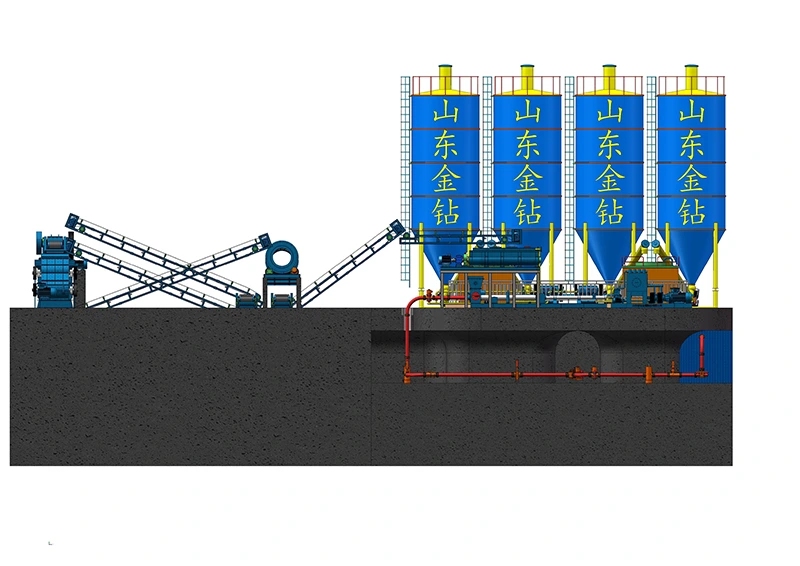
The process typically starts with understanding the tailings stream — particularly its particle-size distribution, because that influences settling behavior, water retention, and how the material flows through a pipeline. Next, water content is adjusted. Thickening or dewatering brings the slurry up to the target solids concentration. For paste backfill, the solids content is high, which changes the rheology significantly — the material no longer behaves like a conventional slurry.
When cemented backfill is required, cement or another hydraulic binder is added. The binder dosage depends on the strength the mine needs and the curing conditions underground. Too little binder, and the fill will not hold; too much, and the cost climbs while the flow characteristics change.
Getting the Backfill from Point A to Point B
Once the backfill material is prepared, it has to be transported — sometimes over long distances — to the filling location underground. This is where the pipeline system becomes critical, and it is the area we at Jinzuan know best.
A backfill pipeline is not just a passive conduit. It is an engineered system, and getting it right means considering pipe diameter, pipeline length, vertical elevation changes, flow rate, backfill density, the number of bends and fittings, pumping pressure, and pressure loss along the route. Each of these factors affects the others. A pump selected without considering the full pipeline profile can leave the system unable to deliver material to the filling point. A pipe diameter chosen from a catalogue without checking the actual hydraulic conditions can cause excessive pressure loss or insufficient flow velocity.
For paste backfill, the demands on the transportation system are even higher. The high solids concentration means different flow behavior, heavier pumping requirements, and greater stress on pipe walls and fittings — especially at bends where the flow direction changes and solid particles impact the pipe wall.
The Pipeline as a Working Component
In our experience supplying backfill pipeline components to mines operated by groups such as China Energy, China Coal, Shandong Energy, Shaanxi Coal, and others, we have seen firsthand that pipe wear is a real and ongoing issue. Backfill material carries abrasive solid particles, and continuous transportation erodes the inside of pipes, elbows, and couplings. Bends are particularly vulnerable.
That is why pipe material, wall thickness, internal surface treatment, elbow geometry, and connection method must be matched to the actual operating conditions. For underground applications where speed of installation and maintenance matters, mechanical or grooved pipe couplings allow faster assembly, disassembly, and replacement than welded connections. The coupling type, however, must match the pipe specification and operating pressure. A mismatch here causes leaks, downtime, and safety risks.
Types of Backfill Systems
Mines use different backfill approaches depending on their conditions:
Hydraulic backfill uses a higher-water-content slurry. It can be pumped through pipelines and discharged underground, but drainage and water management become important.
Paste backfill has a higher solids concentration and less free water. It offers good filling properties but places greater demands on pumps and pipeline components, especially over long distances.
Cemented tailings backfill adds binder to achieve a target strength after curing. The dosage is a design parameter — strength goes up with more cement, but so does cost.
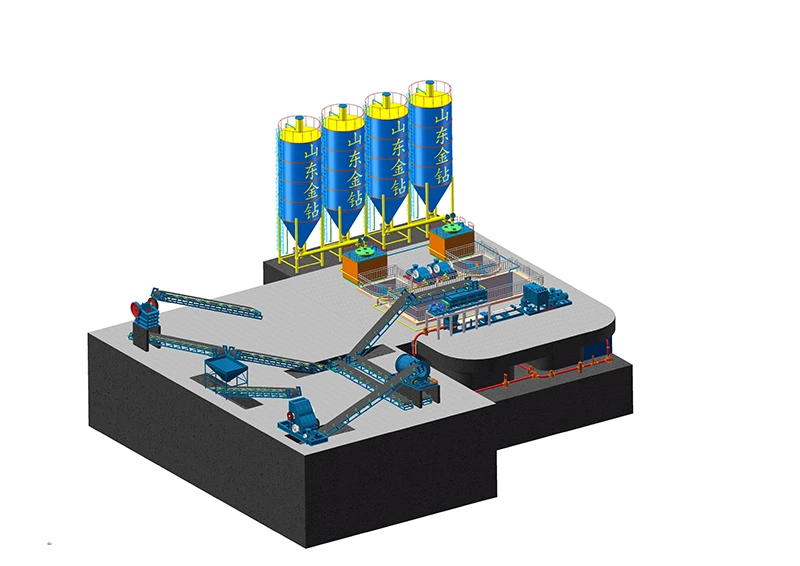
Each system has different material and transportation requirements. Our paste backfill system products are designed to handle the elevated pressures and abrasive conditions associated with high-solids-content material.
What to Check Before Going Ahead
A successful tailings backfill operation starts with material testing and system design. The mine should establish the tailings properties, define the required backfill performance, and then determine the appropriate solids concentration, binder dosage, pumping conditions, and pipeline layout. Pressure loss, pipe wear, maintenance access, and changes in the underground layout should all factor into the design.
A backfill system designed only around the pump, or only around the pipeline, will run into trouble. The preparation plant, pump, pipeline, fittings, valves, and filling point need to function as one integrated system. At GOLDDRILL, our approach has always been to look at the complete transportation route — not just individual components — and we hold over 20 patents and utility models covering pipe couplings, pipeline connectors, and filtration systems that reflect that systems-level thinking.
Closing Thoughts
When the material properties are suitable and the pipeline system is properly engineered, tailings can be transformed from a mineral-processing by-product into a practical backfill material. The technology is proven. The real challenge is making sure the pipeline system — pipes, couplings, elbows, valves, and monitoring equipment — is designed, manufactured, and installed as a coordinated whole.
That is what we do at Shandong GOLDDRILL. Our manufacturing holds ISO 9001 quality management, environmental, and occupational health certifications, along with mining product safety certificates. If you are planning an underground backfill project and want to discuss pipeline design, coupling selection, or custom manufacturing, we are ready to talk.