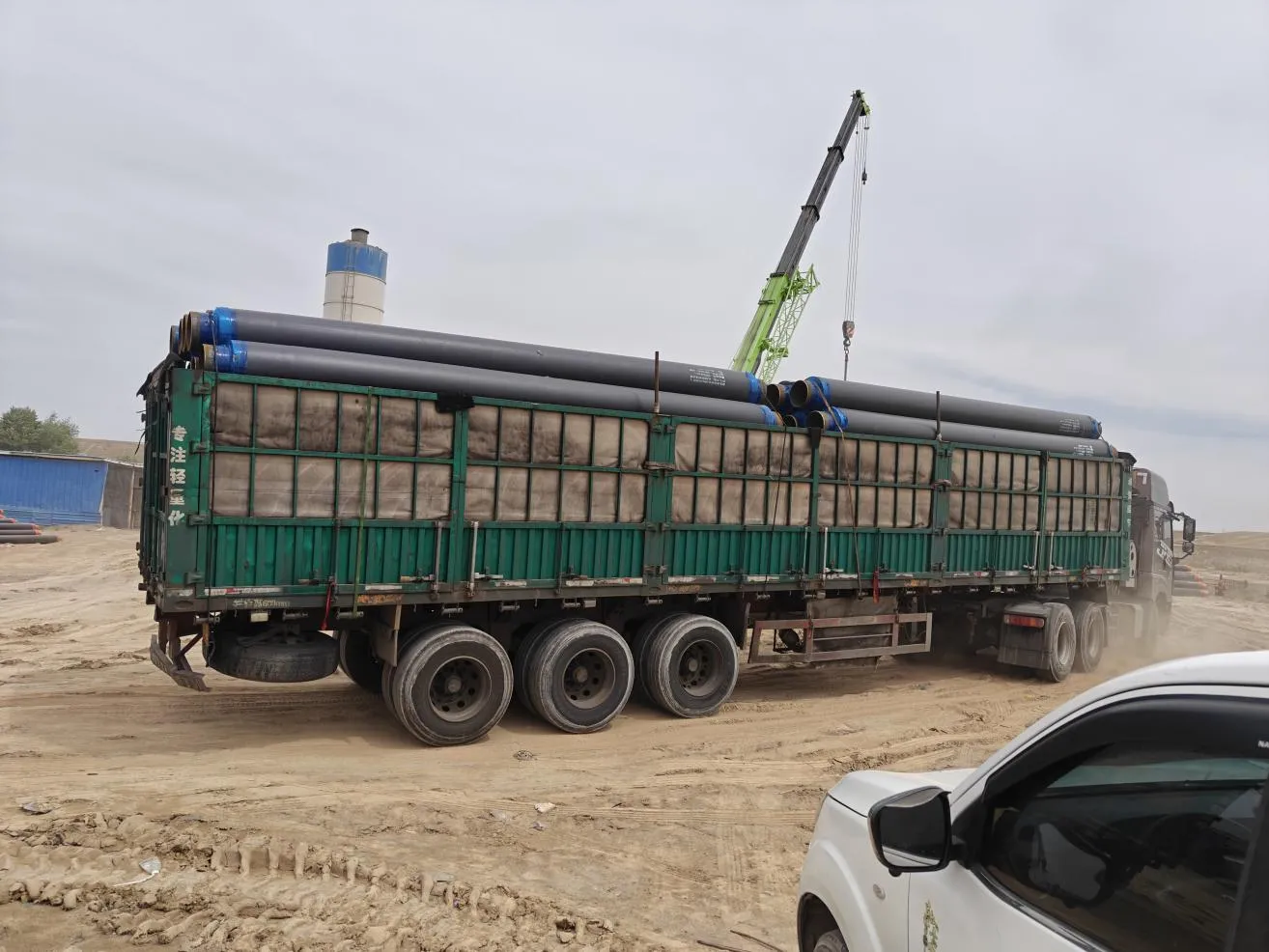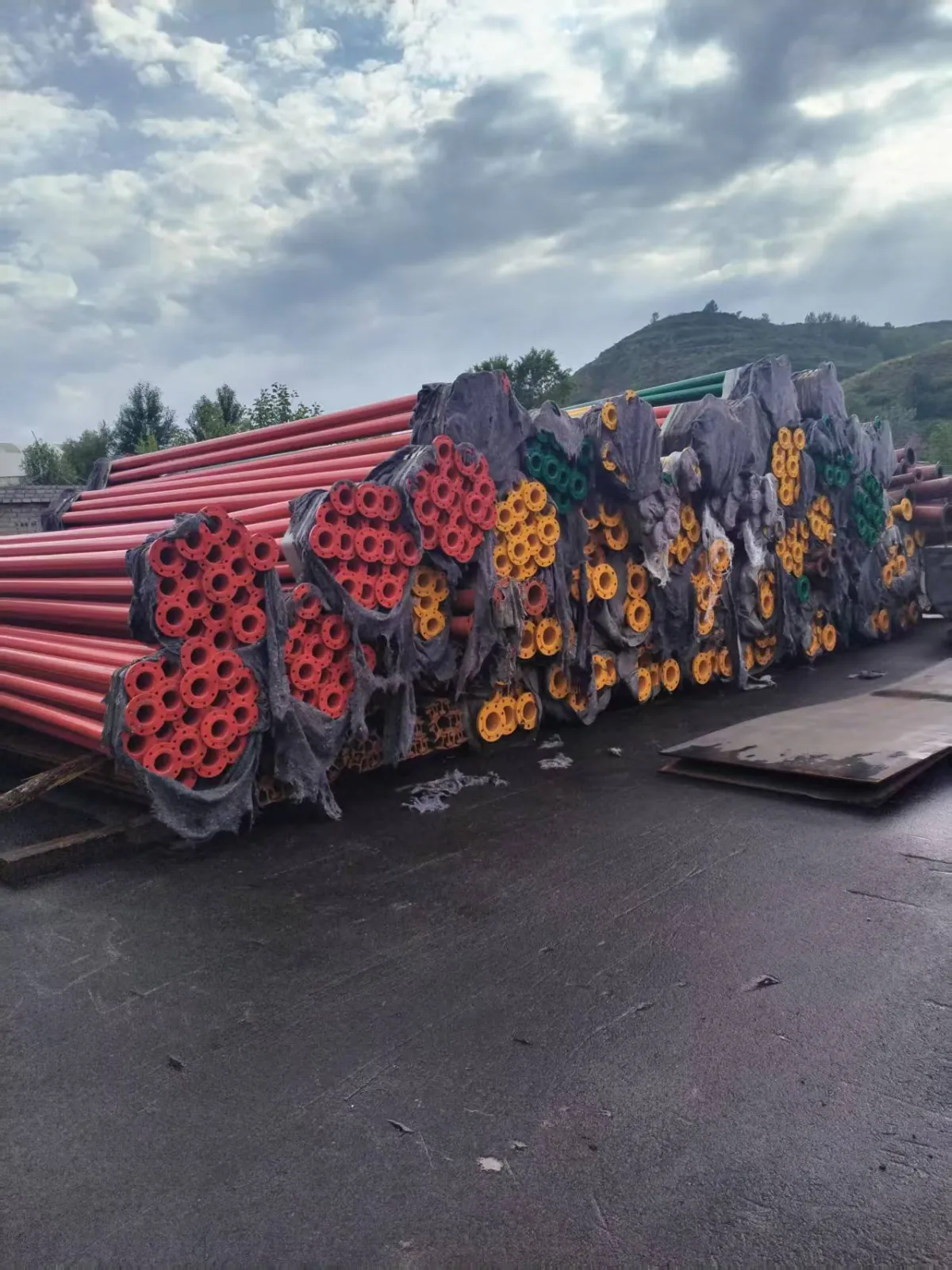
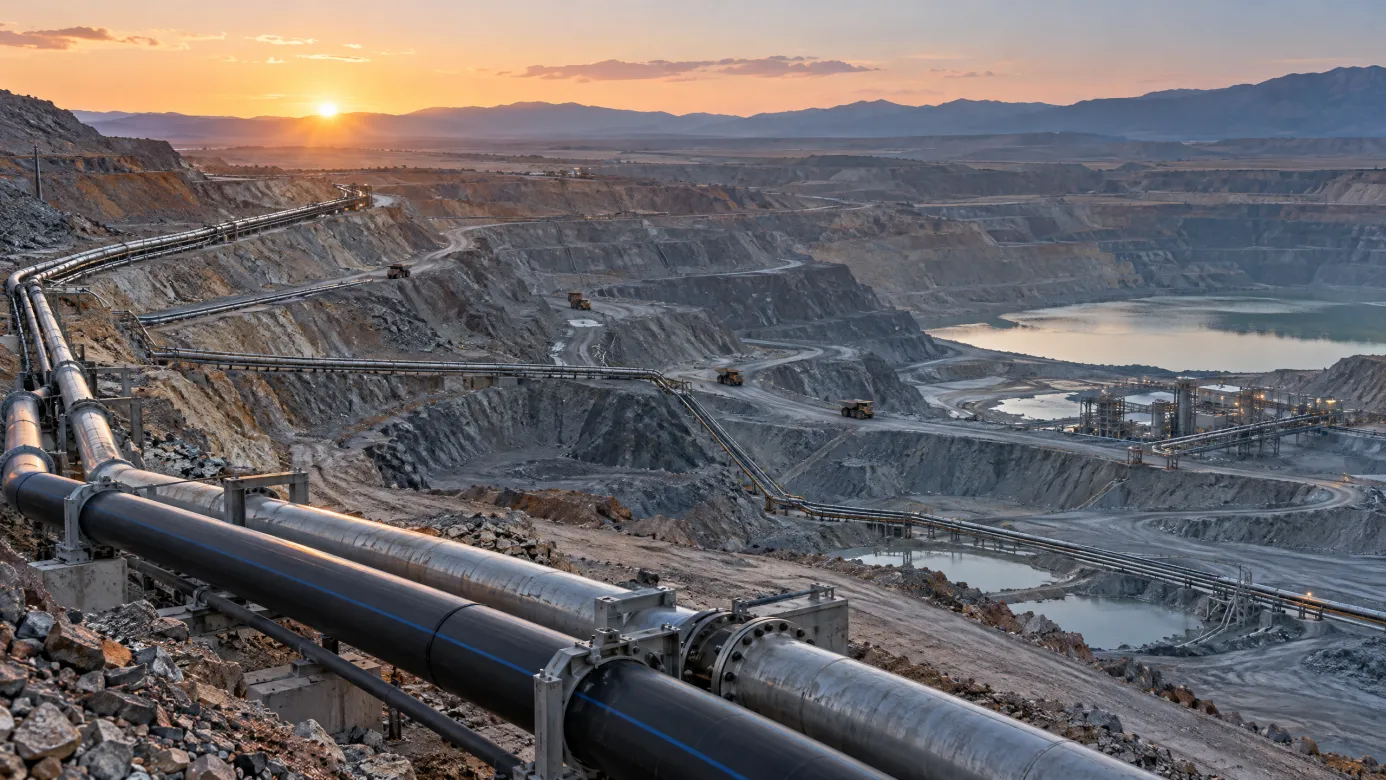
Pipelines are the arteries of every mine. They move ore slurry, tailings, backfill, water and hydraulic fluid across kilometers of often difficult terrain — and when a pipeline fails, production stops. Choosing the right pipeline system and, just as importantly, the right connection method directly determines uptime, maintenance cost and total cost of ownership.
This guide summarizes the main types of pipeline systems used in underground and open-pit mines worldwide, and compares the six connection methods most commonly used to join them — so that mine operators, EPC contractors and procurement teams can specify with confidence.
A word about who we are, because it shapes this guide: Shandong GoldDrill Metal Products Co., Ltd. manufactures high-pressure pipe fittings and complete pipeline systems for underground coal and metal mines — quick-connect couplings, pipe clamps, HDPE and wear-resistant pipes in sizes DN25 to DN300. Most of the recommendations below come from the questions our engineering team answers for customers every week, from groove tolerances to emulsion-line pressure ratings.
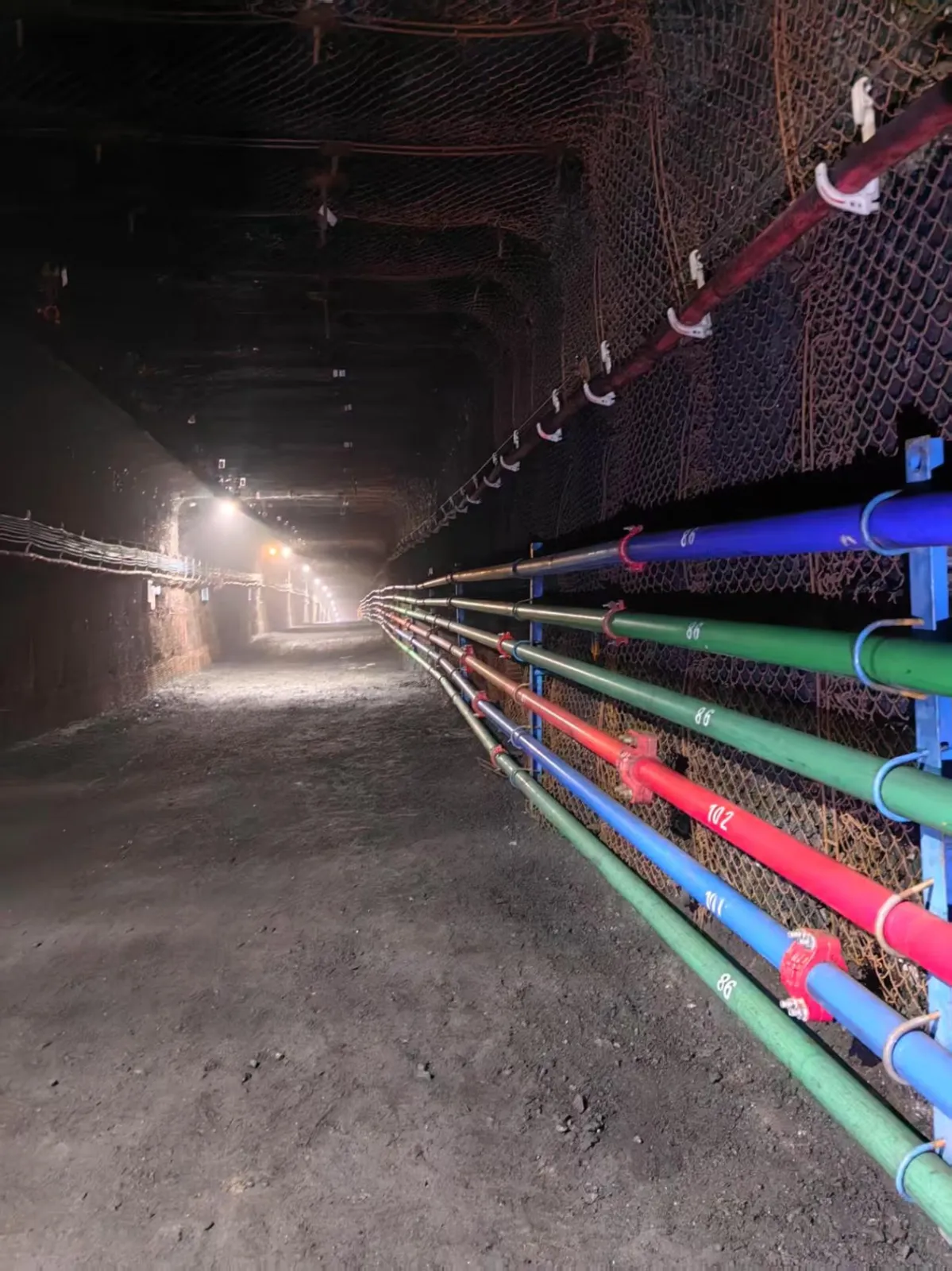
1. Why Connection Methods Matter as Much as Pipe Material
In slurry and tailings service, joints are statistically the weakest points of any pipeline. A pipe body may last 10 years while a poorly selected joint starts leaking within months. Every connection is a potential leak path, a maintenance point and a pressure-drop source — so the connection decision should be made together with the material decision, not after it.
2. Main Types of Mining Pipeline Systems
Mining pipelines are usually classified by the medium they carry. The five systems below cover the vast majority of applications in underground coal mines, metal mines and open pits.
2.1 Slurry and Tailings Pipelines
Slurry pipelines transport ore concentrate from the processing plant, while tailings pipelines carry the waste stream to the tailings storage facility. Both services combine high internal pressure with highly abrasive solid particles, making them the most demanding pipeline application in mining.
Typical materials: wear-resistant steel pipe, rubber-lined steel, HDPE (PE100/PE100-RC) and UHMWPE-lined pipe
Typical pressure: medium to high, depending on line length and elevation
Key design factors: abrasion velocity limits (usually below 3–5 m/s), wear allowance in wall thickness, and rotatable wear spools at bends
2.2 Backfill (Filling) Pipelines
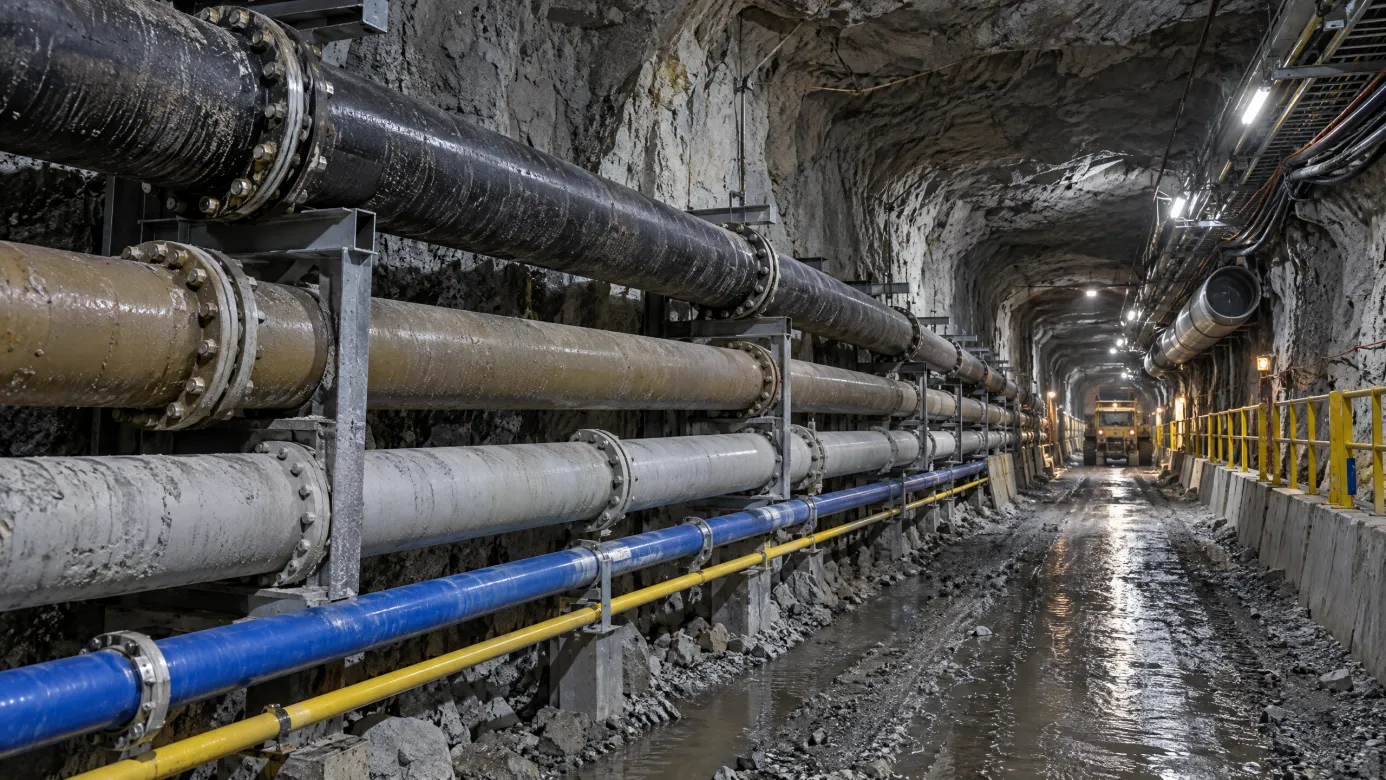
Backfill systems transport cemented paste or classified tailings underground to fill mined-out stopes. The medium is dense, abrasive and often chemically active, and lines run vertically down boreholes as well as along tunnel floors.
Typical materials: wear-resistant steel, HDPE, ceramic-lined elbows at high-impact points
Key design factors: vertical-drop pressure control, bend/ elbow wear, quick section replacement
2.3 Water Supply and Drainage Pipelines
Every mine needs water for dust suppression, processing, drilling and cooling — and needs to drain groundwater and mine water out. These lines are less abrasive than slurry lines but face corrosion, pressure surges and long service-life expectations.
Typical materials: HDPE (corrosion-free), corrosion-protected steel pipe, ductile iron
Key design factors: corrosion protection, surge control, junction compactness underground
2.4 Emulsion Supply Pipelines (Longwall Hydraulic Systems)
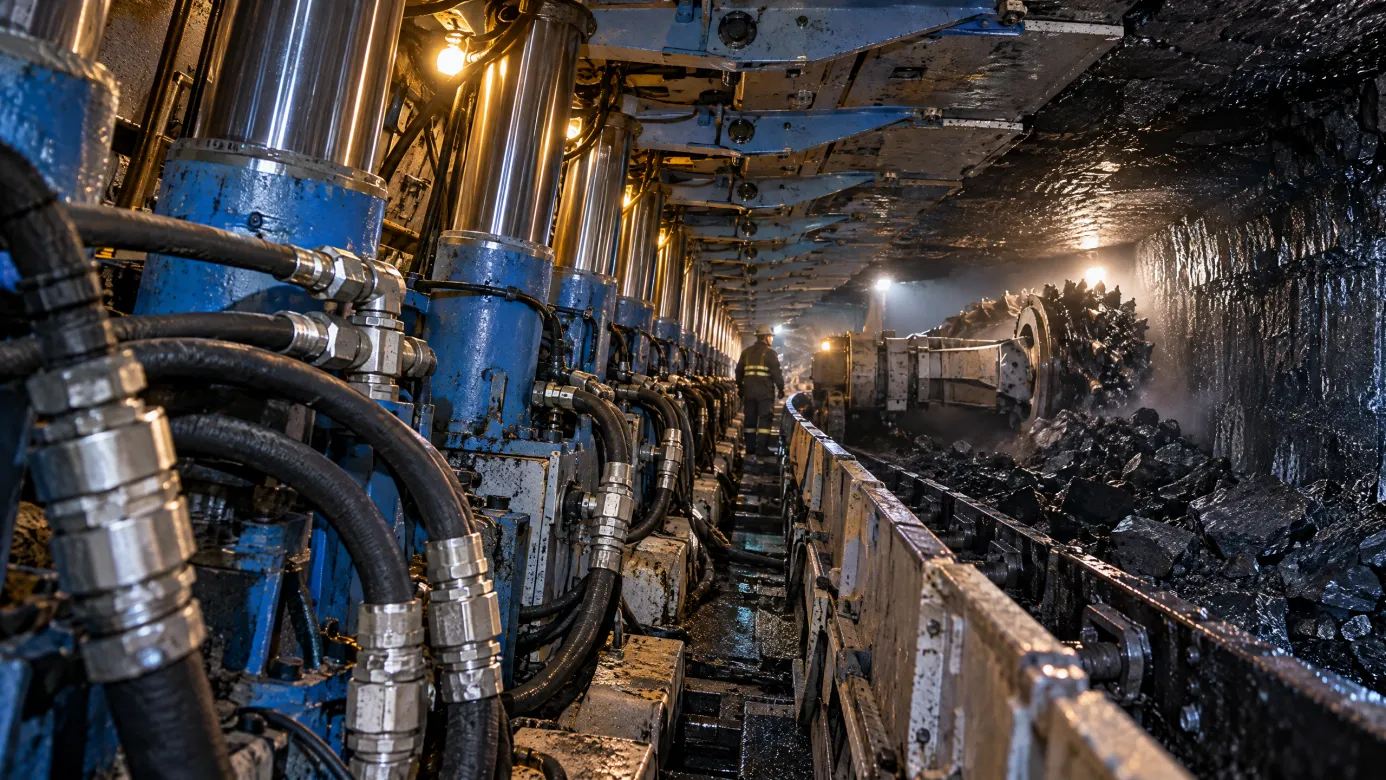
In underground longwall coal mining, high-pressure emulsion is pumped to power hydraulic roof supports. These lines operate at the highest pressures in the mine and demand absolutely reliable, leak-tight quick connections so sections can be extended and reconfigured as the face advances.
Typical materials: high-pressure steel pipe and fittings with quick-connect couplings
Typical pressure: up to 40 MPa on modern longwall systems
Key design factors: pressure rating of every fitting, sealing reliability, fast make-up/break-down
This is the segment we know best. GoldDrill quick-connect couplings and fittings are produced specifically for longwall emulsion supply systems rated up to 40 MPa, where every joint in the line has to hold through pressure cycles without a single drip — and still open up in minutes when the face advances.
2.5 Compressed Air and Auxiliary Lines
Compressed air for pneumatic tools, ventilation-adjacent services and dewatering auxiliary lines complete the picture. These lower-pressure lines favor fast-installation joints, since they are frequently relocated as the mine develops.
2.6 Quick Comparison
(Table 1: Mining pipeline systems at a glance)
|
System |
Medium |
Main Challenge |
Typical Material |
|
Slurry / tailings |
Ore slurry, tailings |
Abrasion + pressure |
Wear-resistant steel, HDPE |
|
Backfill |
Cemented paste |
High-impact wear at bends |
Wear-resistant steel, HDPE |
|
Water supply / drainage |
Clean or mine water |
Corrosion, long life |
HDPE, coated steel |
|
Emulsion supply |
High-pressure emulsion |
Extreme pressure, leak-tightness |
High-pressure steel + quick couplings |
|
Compressed air |
Air |
Frequent relocation |
Steel, HDPE, aluminum |
3. Six Connection Methods Compared
The six methods below are the ones most commonly found on mine sites worldwide. Each is matched to the situations where it outperforms the others — installation speed, disassembly needs and pressure capability are the deciding axes.
3.1 Butt Fusion (HDPE)
Butt fusion melts and joins HDPE pipe ends into a continuous, homogeneous line with strength equal to the pipe body and a smooth bore. A fused line has zero mechanical joints per kilometer, which is why HDPE has become the default for long slurry, tailings and water lines.
Best for: long straight runs of HDPE in slurry, tailings and water service
Watch out: requires fusion equipment and trained crews; not for lined steel
3.2 Flanged Connections
Flanges connect pipe to pumps, valves and instrumentation, and allow individual spools to be unbolted for rotation or replacement. They are the universal interface between pipe systems and equipment.
Best for: pump stations, valve and instrument interfaces, HDPE-to-steel transitions, high-pressure tailings lines
Watch out: 16–24 bolts per joint means slower installation; each flange is a potential leak path if gaskets or torque are wrong
3.3 Grooved and Quick-Connect Couplings
Grooved couplings clamp into rolled or cut grooves at the pipe ends and close with just 2–4 bolts. In mining, quick-connect (quick-release) couplings go further: they allow pipe sections to be connected and disconnected in minutes without special tools — the reason they dominate underground lines that must be extended, relocated or repaired quickly.
Best for: underground water, drainage and emulsion lines; high-maintenance zones; fast installation projects
Watch out: verify coupling pressure rating; grooves must not compromise pipe wall integrity
From our factory floor: the most common failure we see is not the coupling itself but the groove. Field-rolled grooves with out-of-tolerance depth or width chew up gaskets and weep under pressure cycles. Whenever possible, order pipe with grooves formed at the factory to standard tolerances, and match the gasket compound — EPDM for water, NBR for oil-based media — to the fluid in the line.
3.4 Welded Joints
Welding produces strong, permanent, leak-tight joints on unlined steel and is the traditional default. Welded lines, however, cannot be disassembled — replacement means cutting — and welding heat damages internal liners.
Best for: permanent unlined steel lines, non-corrosive water service
Watch out: no disassembly, not suitable for lined pipe, needs welders and NDT
3.5 Threaded Connections
Threaded fittings suit small-diameter, low-to-medium pressure lines such as instrumentation, compressed air and drill-water lines. They install fast with simple tools but are limited in diameter and pressure.
Best for: DN25–DN80 auxiliary lines
Watch out: thread sealing under vibration; not for large diameters
3.6 Clamped and Compression Fittings
Clamp and compression-style fittings bridge small-bore pipes and hoses without welding, and pipe clamps themselves anchor and support the line, absorbing vibration and movement.
Best for: hose-to-pipe transitions, temporary lines, vibration control
Watch out: pressure and temperature limits of the sealing element
3.7 Connection Method Comparison Table
(Table 2: Connection methods for mining pipelines)
|
Method |
Install Speed |
Disassembly |
Pressure Capability |
Best Application |
|
Butt fusion |
Fast (fused line) |
No |
Equal to pipe |
Long HDPE slurry/water runs |
|
Flange |
Slow |
Yes |
Very high |
Pump/valve interfaces |
|
Grooved / quick-connect coupling |
Fastest |
Yes |
Medium–high |
Underground lines, maintenance zones |
|
Welding |
Slow |
No |
Very high |
Permanent steel lines |
|
Threaded |
Fast |
Yes |
Low–medium |
Small-bore auxiliary lines |
|
Clamp / compression |
Fast |
Yes |
Low–medium |
Hoses, temporary lines |
4. How to Choose: A Practical Selection Checklist
Run the five checks below in order before finalizing a pipeline specification — most specification errors trace back to skipping one of them.
Medium first — abrasive slurry demands smooth bores and minimal joints; clean water tolerates almost any method
Pressure envelope — include temperature, surge and wear allowances, not just pump rating; high-pressure emulsion systems (up to 40 MPa) require certified high-pressure fittings throughout
Maintenance frequency — lines that move or need regular spool rotation should use couplings or flanges, never welds
Terrain and installation resources — remote sites favor HDPE fusion and lightweight couplings over crane-dependent flanged steel
Lifecycle cost, not purchase price — a coupling that saves two crew-days per kilometer usually repays its premium in the first year
5. Frequently Asked Questions
Q1: What pipe material lasts longest in abrasive slurry service?
It depends on velocity and particle size. At typical slurry velocities, HDPE and UHMWPE wear several times slower than unlined steel; at very high velocities or extreme impact points, ceramic-lined or heavy-wall wear-resistant steel spools remain the better choice.
Q2: Can grooved couplings handle high pressure?
Yes — properly rated grooved couplings are widely used on tailings and water lines, and high-pressure quick-connect coupling systems are standard on longwall emulsion lines up to 40 MPa. Always match the coupling rating to the full design pressure including surges.
Q3: Why not flange the entire pipeline?
Flanging every joint multiplies cost, leak paths and installation time. The accepted engineering rule is simple: fuse or couple wherever possible, and flange only where disassembly is genuinely required — at pumps, valves and planned wear spools.
Q4: How often should underground pipeline connections be inspected?
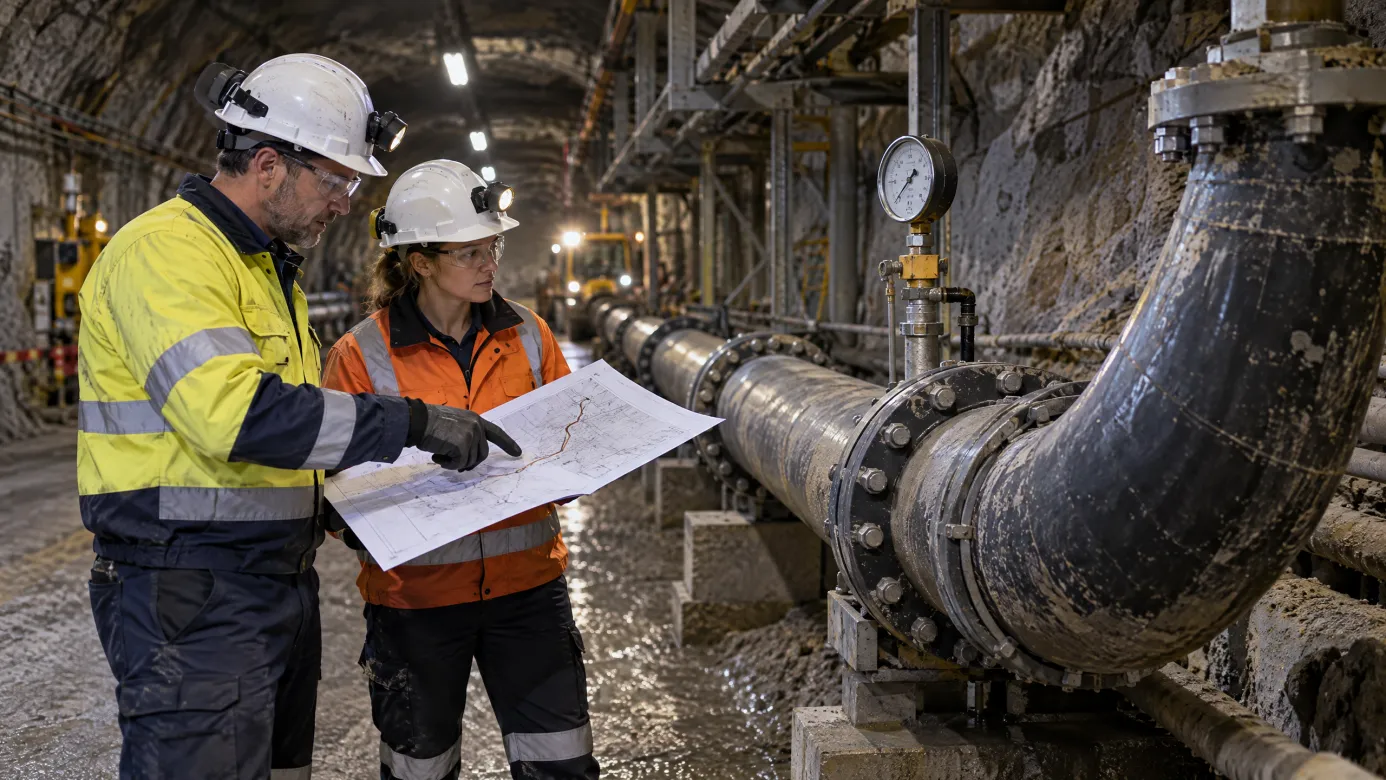
Best practice is quarterly inspection of bends, couplings and flanges, since the majority of pipeline failures occur at or near joints and direction changes.
Q5: What is a rotatable wear spool?
A short flanged or coupled spool installed at high-wear points. Because it can be unbolted and rotated, wear is distributed around the full circumference — often multiplying the service life of the pipeline section.
Q6: Can HDPE be connected to existing steel lines?
Yes, via flange adapters with backing rings, or via transition fittings. The steel-to-HDPE interface is one of the standard places where flanges remain the right choice.
Q7: What should I check when sourcing grooved couplings from a Chinese manufacturer?
Ask for three things: material certificates for the coupling body and bolts, the groove tolerance standard the fittings are machined to, and pressure test reports for the actual size you are buying. If the supplier walks you through gasket compound selection for your medium — as we do for every GoldDrill order — that is usually a good sign you are dealing with a factory rather than a trading office.
6. Conclusion
A mining pipeline is a system decision, not a component purchase: the medium dictates the material, and the maintenance strategy dictates the connection method. For long abrasive lines, fused HDPE minimizes joints; for underground lines that must move with the mine face, quick-connect couplings and clamps deliver speed and flexibility; for equipment interfaces, flanges remain irreplaceable — and high-pressure emulsion systems demand certified high-pressure fittings end to end.
As a manufacturer specializing in high-pressure mining pipe fittings — quick-connect couplings, pipe clamps, flanged fittings, HDPE and wear-resistant pipe systems in DN25–DN300 — we help mines and contractors match the right connection method to the right service. Contact our engineering team for a specification review or a quotation for your next pipeline project.
About Shandong GoldDrill Metal Products Co., Ltd.
Shandong GoldDrill Metal Products Co., Ltd. is a China-based manufacturer of pipeline systems for underground and open-pit mines. Our range covers quick-connect couplings, high-pressure pipe fittings, pipe clamps, HDPE pipes, wear-resistant pipes, corrosion-protected steel pipes and industrial valves in DN25–DN300, including complete emulsion supply systems rated up to 40 MPa. Production is ISO-certified, and our products carry China's MA/KA mining product safety certifications.