We recently received a steel pipe enquiry from a mining project in South Africa.
It looked simple enough at first. The client listed the pipe sizes and lengths, and asked for a quotation. But attached to the enquiry was a full specification: the pipe was to comply with SANS 62, in a nominated grade. The finish was galvanized. The ends had to be flanged, to a separate flange standard — SABS 1123 — with its own pressure class.
That last part is what makes these enquiries different. The client was not buying pipe. The client was buying a pipe and connection system, defined by two independent South African standards, and expecting us to reconcile both against our own production.
This article is our attempt to lay out the comparison clearly: what SANS 62 and SABS 1123 actually control, where Chinese steel pipe standards sit in relation to them, and why the two systems cannot simply be read across.
The short version
SANS 62 defines the pipe itself — grade, dimensions, wall thickness allowance, manufacturing method and testing. It is a complete product definition, not a size table.
SABS 1123 defines the flange — bolt count, bolt size and pitch circle diameter. It is a separate standard with its own logic, and it has to be matched independently.
Nominal size is not the outside diameter. NB and DN are naming systems inherited from historical pipe sizing. They identify what fits together; they do not measure anything.
No Chinese standard maps directly onto SANS 62. Two standards can share a nominal size and still differ in OD, wall thickness, grade or test regime.
Most mismatches on these projects are not manufacturing problems. They are specification-reading problems.
Why the two systems do not line up
It is worth saying plainly: the difference between SANS 62 and Chinese steel pipe standards is not a quality difference. Chinese mills produce pipe that meets the dimensional and mechanical requirements of SANS 62 without difficulty. The difference is in how the two systems organise the product.
A South African specification tends to treat the pipe as one element of a defined connection system. The pipe body standard, the dimensional regime, the surface finish and the connection method are each nominated separately, and each can be enforced on its own. A client can reject a shipment because the coating does not match, even if the pipe dimensions are perfect.
A Chinese domestic specification more often works from a consolidated product standard, where dimensions and material grade are read together as one package. That is a perfectly workable system — it is simply a different one.
This structural difference is where most cross-border technical mismatches originate. Not in the pipe. In the reading of the specification.
What SANS 62 actually controls
SANS 62 is best understood as a complete product definition covering five things:
|
Area of control |
What it determines |
|
Grade |
The designated pipe grade, which drives wall thickness and test regime |
|
Dimensions |
Outside diameter tolerances and wall thickness allowances |
|
Manufacturing |
Permitted production methods and process controls |
|
Testing |
Mandatory test regime and acceptance criteria |
|
Surface |
Requirements affecting finish and subsequent coating |
This is why a specification that cites "SANS 62" without a grade is incomplete. The grade is what fixes the wall thickness envelope and the applicable test regime. It is a small omission in an email and a serious one in a quotation.
NB, DN, OD, WT: four abbreviations that cause most of the trouble
These four terms appear in nearly every enquiry, and they are confused constantly:
|
Term |
Meaning |
What it actually is |
|
NB |
Nominal Bore |
A designation, not a measurement |
|
DN |
Nominal Diameter |
The metric equivalent of NB |
|
OD |
Outside Diameter |
The measured outer dimension |
|
WT |
Wall Thickness |
The measured wall dimension |
The critical point is that nominal size does not equal outside diameter.
Nominal bore is a matching system. It exists so that pipe, flanges, couplings and fittings can be specified as belonging together. It is not a dimension, and it does not describe the physical outside of the pipe. Chinese designations work the same way — DN is a label, not a number to be measured.
When this is misunderstood, the failure mode is predictable: the pipe arrives nominally correct and physically incompatible. It fits on paper. It does not fit on site. The problem usually only becomes visible during assembly, which is the worst possible time to find it.
Why you cannot just find the "equivalent" Chinese standard
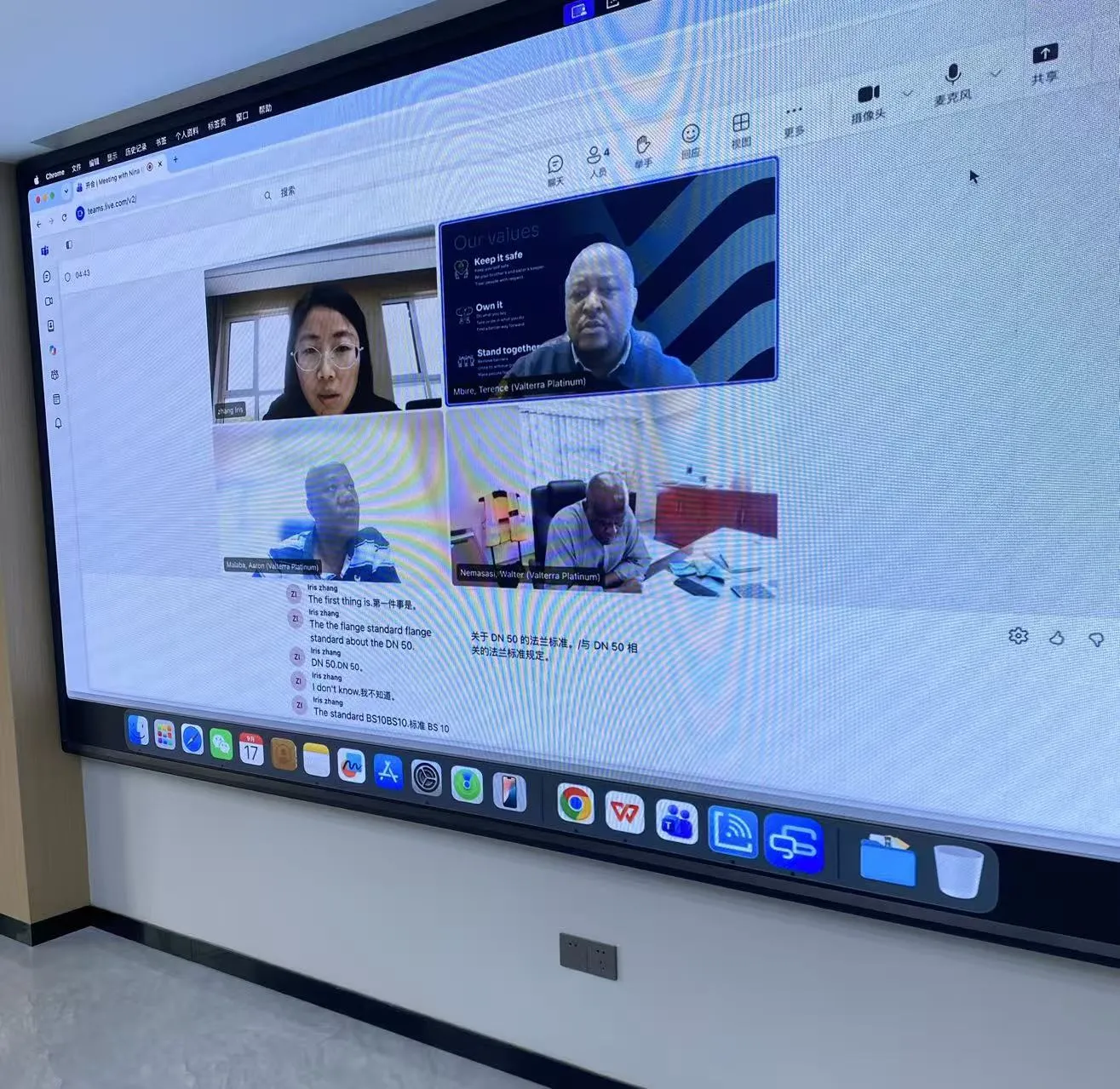
This is the question we get most often, and the honest answer is that standards of different countries do not follow simple one-to-one correspondence.
Two standards may use the same nominal designation and still differ in outside diameter, wall thickness, material grade or testing. The reverse also happens — two systems may describe functionally similar pipe through entirely different grade nomenclature, which makes any "equivalent grade" claim impossible to sustain without verification.
To judge whether pipe under two standards is genuinely interchangeable, seven things have to be checked together:
Product standard — scope, grade definitions, test regime
Steel pipe grade
Outside diameter and wall thickness
Material grade
Length and length tolerance
Surface treatment
Connection method
Only when all seven align can the two products be treated as interchangeable. Checking five of them is not eighty per cent of the answer. It is an unverified quotation.
SABS 1123: the flange is a separate problem
This is the part of the South African enquiry that surprises suppliers most often. The pipe standard and the flange standard are independent documents, and the client nominates both.
SABS 1123 governs a different set of parameters:
|
Parameter |
Governed by |
|
Bolt quantity |
SABS 1123 |
|
Bolt size |
SABS 1123 |
|
Pitch circle diameter (PCD) |
SABS 1123 |
|
Pipe outside diameter and wall thickness |
SANS 62 |
|
Pipe grade and testing |
SANS 62 |
A flange can look perfectly correct on its own and still fail acceptance, because its bolt pattern, PCD or pressure rating does not comply. Meeting the pipe standard does not automatically produce a matching flange — each has to be verified against its own specification.
That is what makes these enquiries broader than they first appear. The procurement object is a complete connection system, not bare pipe. For mining, water treatment and industrial transport projects, the flanges, fittings and connectors all have to be matched to the nominated pipe standard. Get one of them wrong and the problem moves from the factory to the site.
Pipe is only one part of the system
Cross-border enquiries often arrive as if a mining pipeline project needs "steel pipes." In practice, a complete mining piping solution covers several categories that have to be specified together:
Pipe joining — how pipe lengths are connected
Pipe couplings — mechanical joints, including grooved and shouldered types
Fittings — elbows, tees, reducers and transitions
Valves — isolation, control and safety functions
Pipeline system design — matching all of the above to the duty and the standard
A supplier who can only quote bare pipe leaves the client to solve compatibility on their own. SANS 62, SABS 1123 and the associated standards exist precisely to remove that risk — which is why they are best read as one connected requirement, not as separate line items on a quote.
What we check before quoting
Eight items. These come from the enquiries we have gotten wrong, or nearly gotten wrong:
|
# |
Check |
Why |
|
1 |
The full standard reference, including grade — not just "SANS 62" |
Grade fixes wall thickness and testing |
|
2 |
Convert NB/DN to actual OD and cross-check against the specification |
A nominal label is not a dimension |
|
3 |
Wall thickness against the specified standard, not against domestic practice |
Chinese standard thickness may differ |
|
4 |
The flange standard and pressure designation |
Bolt pattern and PCD follow the flange standard |
|
5 |
Surface treatment and the coating standard it must meet |
Galvanizing requirements vary by region |
|
6 |
Whether the project wants a full system or pipe only |
Defines the scope of the quotation |
|
7 |
Certification and documentation requirements |
Needed for customs and site acceptance |
|
8 |
Whether mine safety marking is mandatory |
Required on certain underground projects |
The gap is in standards, not products
The biggest difference between the South African and Chinese steel pipe markets is not manufacturing capability. It is standard system knowledge and the technical reading of project specifications.
Knowing SANS 62, SABS 1123, NB, DN, OD and WT — and knowing that the two South African standards operate independently — is what separates a supplier who can quote a South African mining project from one who cannot.
That is also why we describe the work as standard interpretation rather than simple supply. For an overseas mining or industrial project, the pipe is the easy part. Reading the specification correctly, and matching the whole system to it, is the part that decides whether a delivery is accepted.
If you are working against SANS 62 or SABS 1123 and want a second opinion on the specification, we are happy to go through it.
About GoldDrill
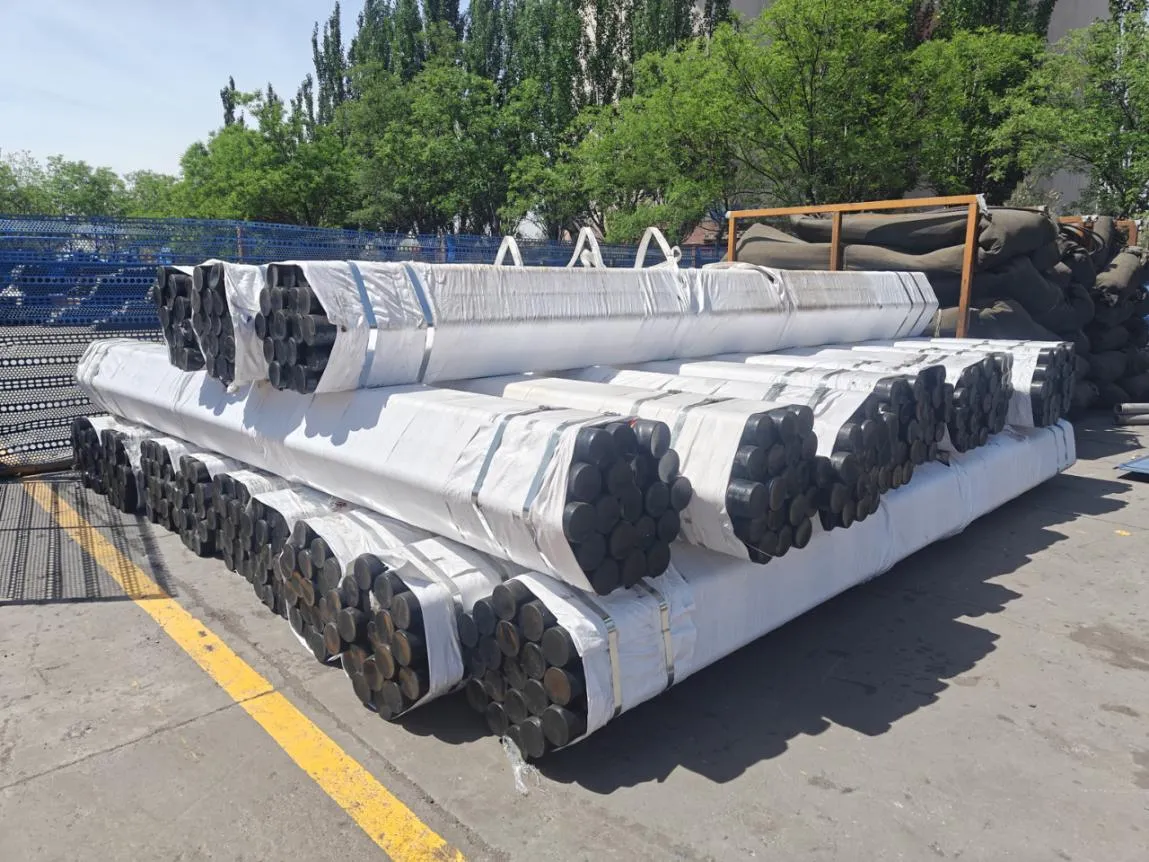
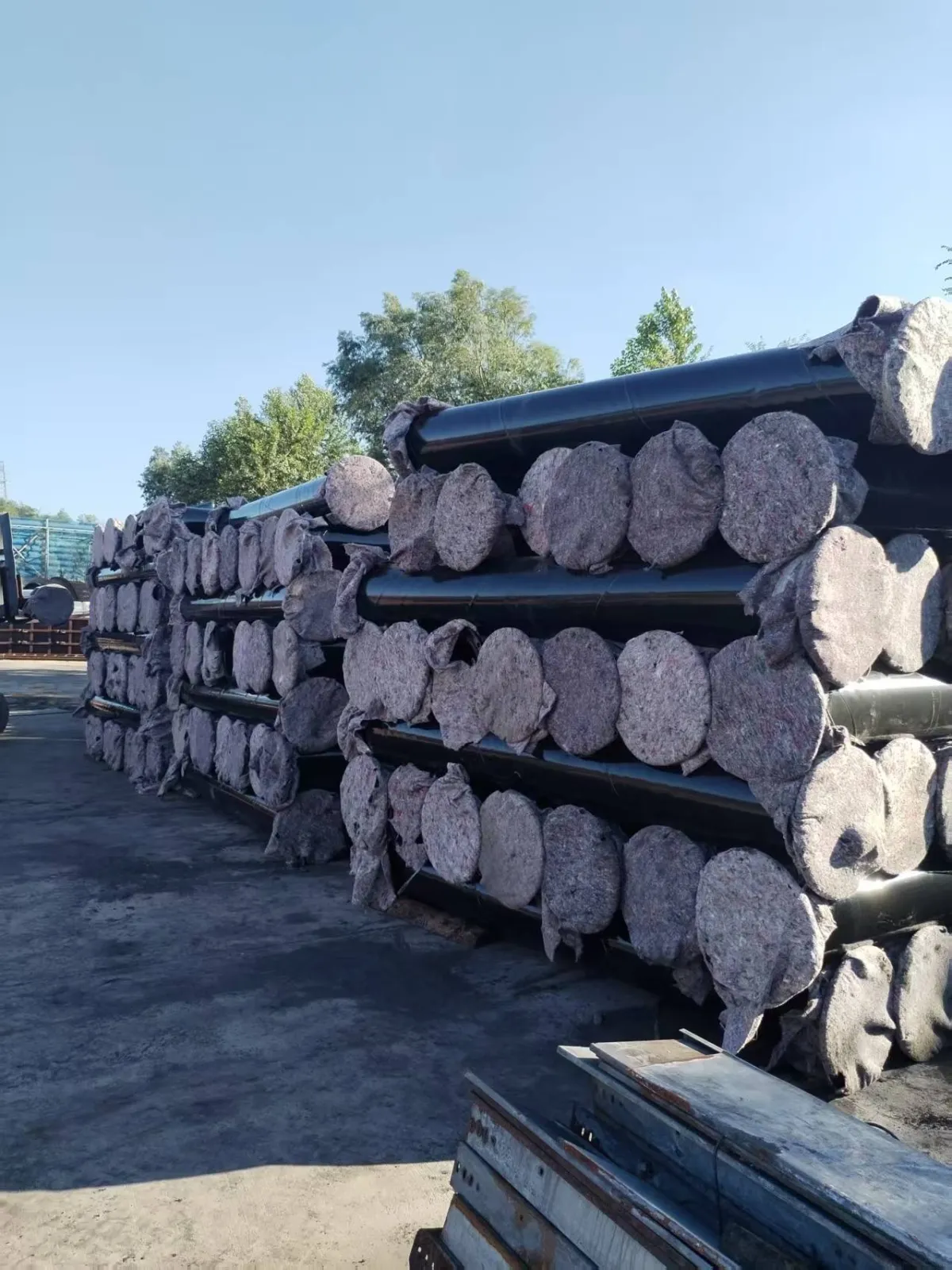
GoldDrill manufactures mining piping system products including pipe connectors, composite steel pipes, flexible pipe couplings and complete piping solutions — supporting global clients with product and system supply complying with various national standards.
Working on a South African specification? Request a technical quotation · Contact us on WhatsApp