7 Key Differences That Determine Pipeline Selection
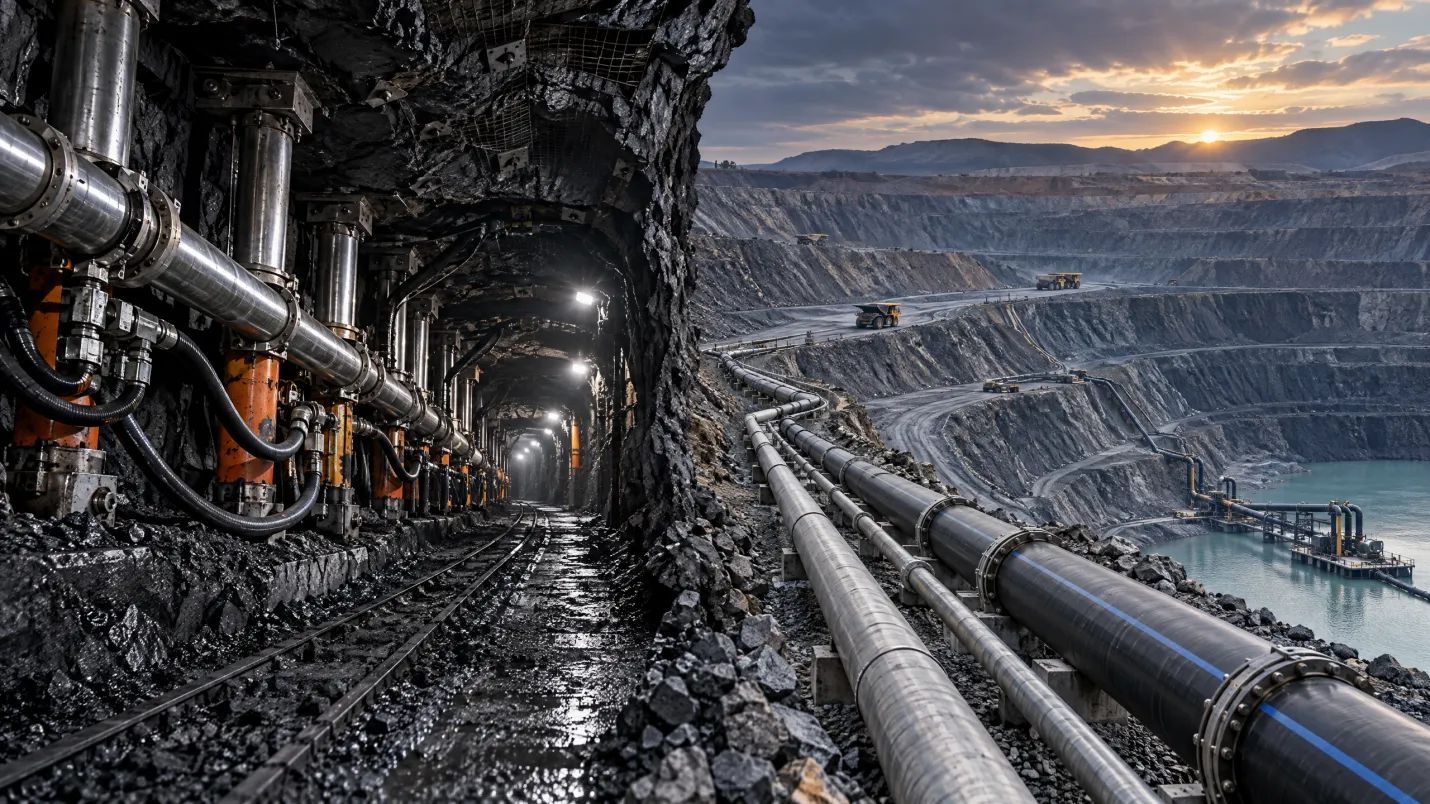
Choosing a piping system for a mine is never a one-size-fits-all decision. An underground coal mine and an open-pit mine may both need to move water, slurry, and hydraulic fluid — but the way their piping systems are designed, connected, and maintained is fundamentally different. Selecting the wrong configuration leads to premature pipe wear, unplanned downtime, and higher total cost of ownership.
This guide compares underground and open-pit mine piping systems across seven key dimensions — pressure, layout, media, materials, connections, safety standards, and maintenance — so procurement engineers and mine operators can match the right pipeline technology to the right mining environment.
Quick Comparison: Underground vs. Open-Pit Mine Piping
|
|
Underground Mine |
Open-Pit Mine |
|
Typical operating pressure |
Medium to very high (up to 40 MPa for emulsion supply) |
Low to medium (gravity flow to booster pumps) |
|
Layout |
Confined roadways, short sections, many bends |
Long straight runs on benches and ramps |
|
Main media |
Clean water, hydraulic emulsion, face slurry |
Sediment-laden water, tailings and slurry over long distances |
|
Preferred pipe materials |
Corrosion-protected steel pipe (certified) |
HDPE pipe, large-diameter steel |
|
Preferred connections |
Quick-connect / grooved couplings |
Flanged joints, butt-fusion HDPE |
|
Safety requirements |
Mine safety certification (MA/KA), flame-retardant, gas-safe |
Standard industrial, UV and weather resistance |
|
Relocation frequency |
High — system moves with the working face |
Moderate — pumps relocate as the pit deepens |
1. Operating Pressure: Gravity Flow vs. High-Pressure Supply
The single biggest difference is pressure.
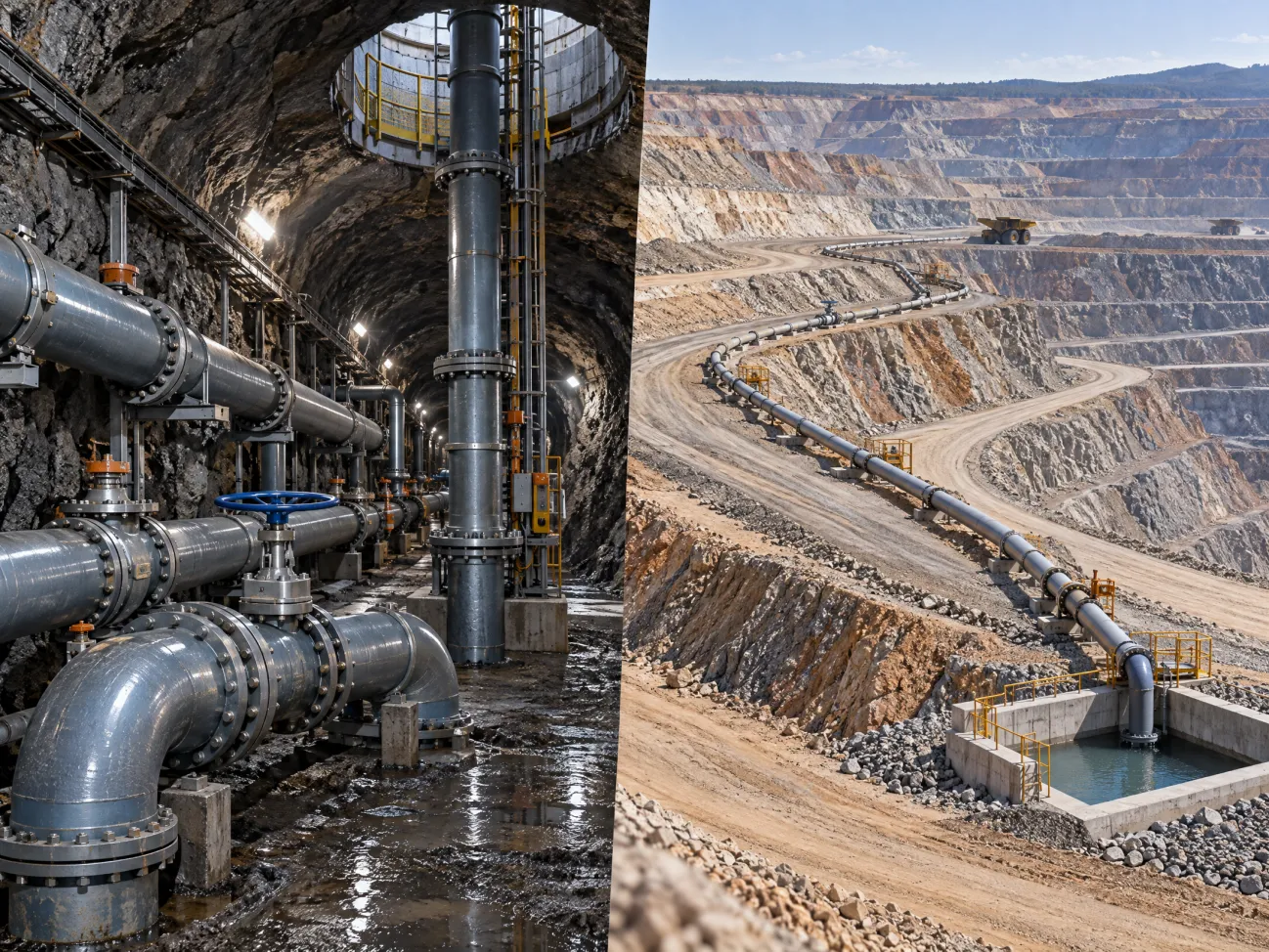
In an underground mine, water often has to be pumped upward through hundreds of meters of shaft or incline, which means high-pressure multi-stage dewatering systems. More critically, modern longwall and mechanized faces rely on hydraulic emulsion supply systems that power roof supports and machinery. These emulsion lines routinely operate at pressures up to 40 MPa, which demands seamless steel pipe, high-pressure fittings, and correspondingly rated valves — anything less is a safety hazard.
In an open-pit mine, most water handling is gravity-assisted drainage or low-to-medium pressure pumping from sumps and dewatering wells. Pressure requirements are lower, but flow volumes are often much larger, shifting the design focus toward large diameters and abrasion resistance rather than pressure rating.
2. Installation Space and Layout
Underground piping lives in tight spaces. Lines run along roadways, over roof supports, and through boreholes from surface, navigating constant bends around infrastructure. Short pipe sections, compact fittings, elbows, and space-saving couplings dominate the design.
Open-pit piping is the opposite: long straight runs along bench crests, ramps, and in-pit haul roads, often several kilometers from the pit floor to the plant. The layout challenges are terrain, slope stability, and crossing haul roads — not confined space.
3. Media and Abrasion: What Flows Through the Pipe
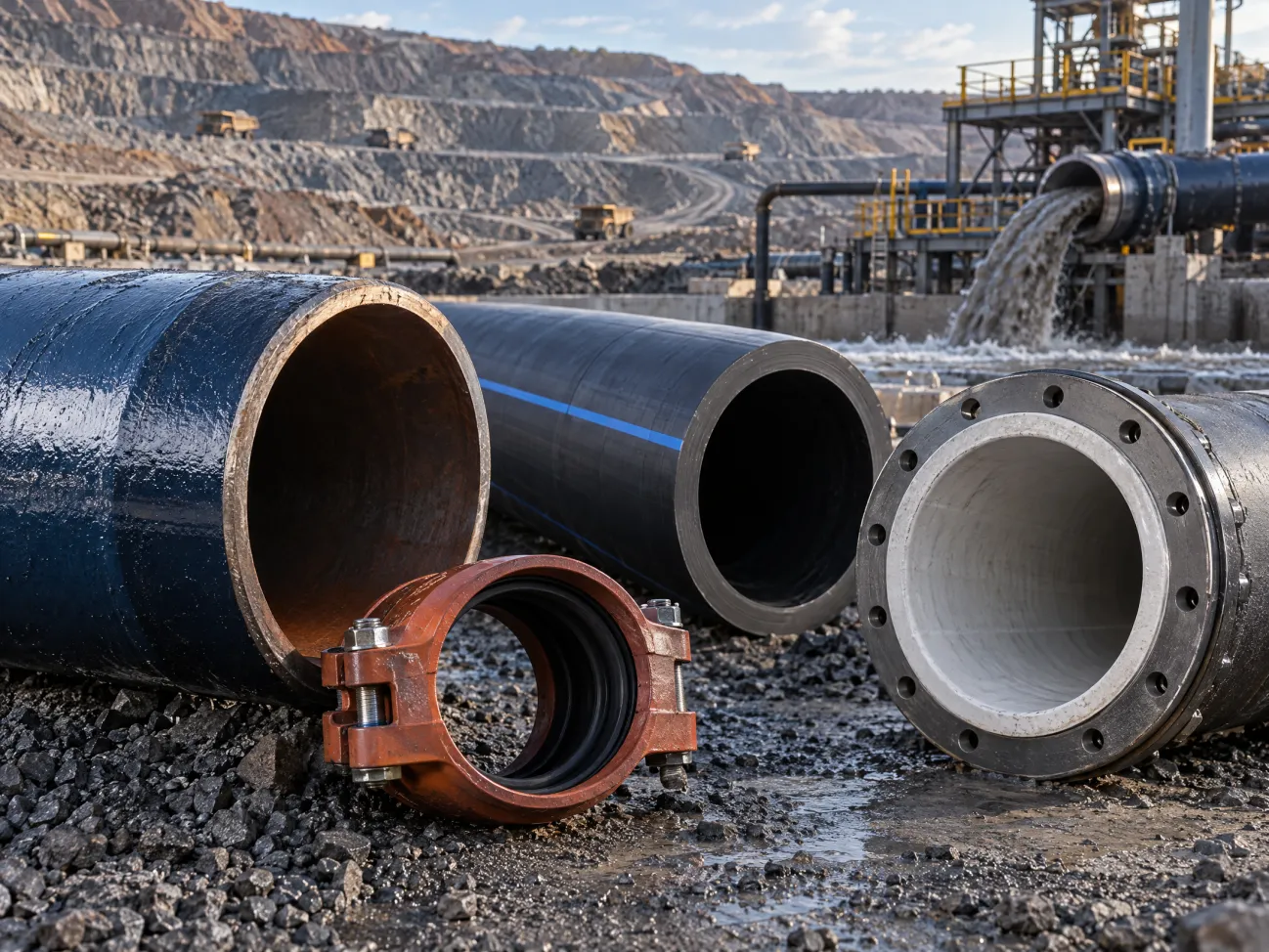
Underground systems mainly carry relatively clean water and emulsion, plus slurry at the working face. Wear is a concern, but pressure integrity and corrosion protection usually drive material selection.
Open-pit systems handle sediment-laden water, tailings, and transfer slurry with high solids content. This is one of the most abrasive services in any industry — a steel pipe can wear through in months. For these lines, wear-resistant pipes (with hardened or lined internal surfaces) and oversized diameters to reduce velocity are the standard answer, and they frequently pay for themselves within the first replacement cycle.
4. Material Selection: Certified Steel vs. HDPE
Underground mines typically require certified, corrosion-protected steel pipe. Steel provides the pressure rating and the mechanical strength to survive roof-fall impacts, and in coal-producing countries such as China, underground pipe must carry mine safety certifications such as MA (China Coal Safety) or KA marks. Steel sections are also easier to support from roadway roofs and ribs.
Open-pit mines favor HDPE pipe wherever pressure allows: it is lightweight, flexible across uneven terrain, naturally corrosion-proof, resistant to UV with proper stabilizers, and can even float for pontoon-mounted pump lines. Large diameters are practical with butt-fusion joining. For high-pressure or high-wear sections, open pits still use steel — typically as discharge mains and at transfer stations.
5. Connection Methods: Why Underground Mines Love Quick-Connect Couplings
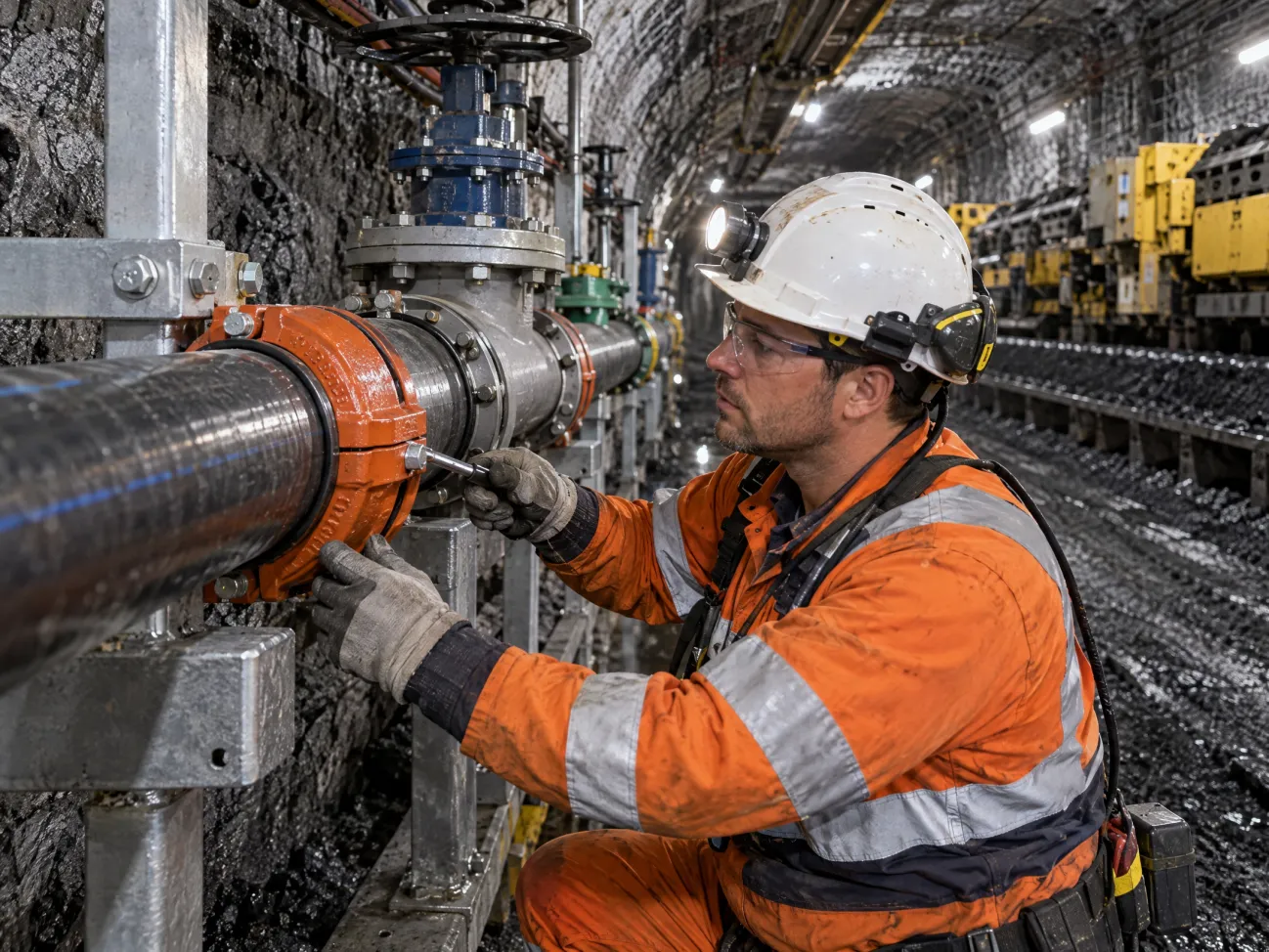
This is where the two environments diverge most in day-to-day practice.
Underground, hot work (welding) is heavily restricted or prohibited in gas-prone coal mines. Pipe must be joined mechanically, quickly, and often repeatedly. Quick-connect and grooved couplings are the industry standard because they:
•Install in minutes with simple tools — no welding, no fire permits
•Accommodate angular deflection and ground movement
•Allow a section of line to be dismantled and re-laid as the working face advances
Open-pit lines, by contrast, are largely permanent or semi-permanent. Flanged connections suit steel pump stations, and butt-fusion creates leak-free long-run HDPE mains. Grooved couplings still add value at pump tie-ins, valve clusters, and points where fast dismantling helps.
Product Focus: GoldDrill High-Pressure Grooved Fittings for Underground Service
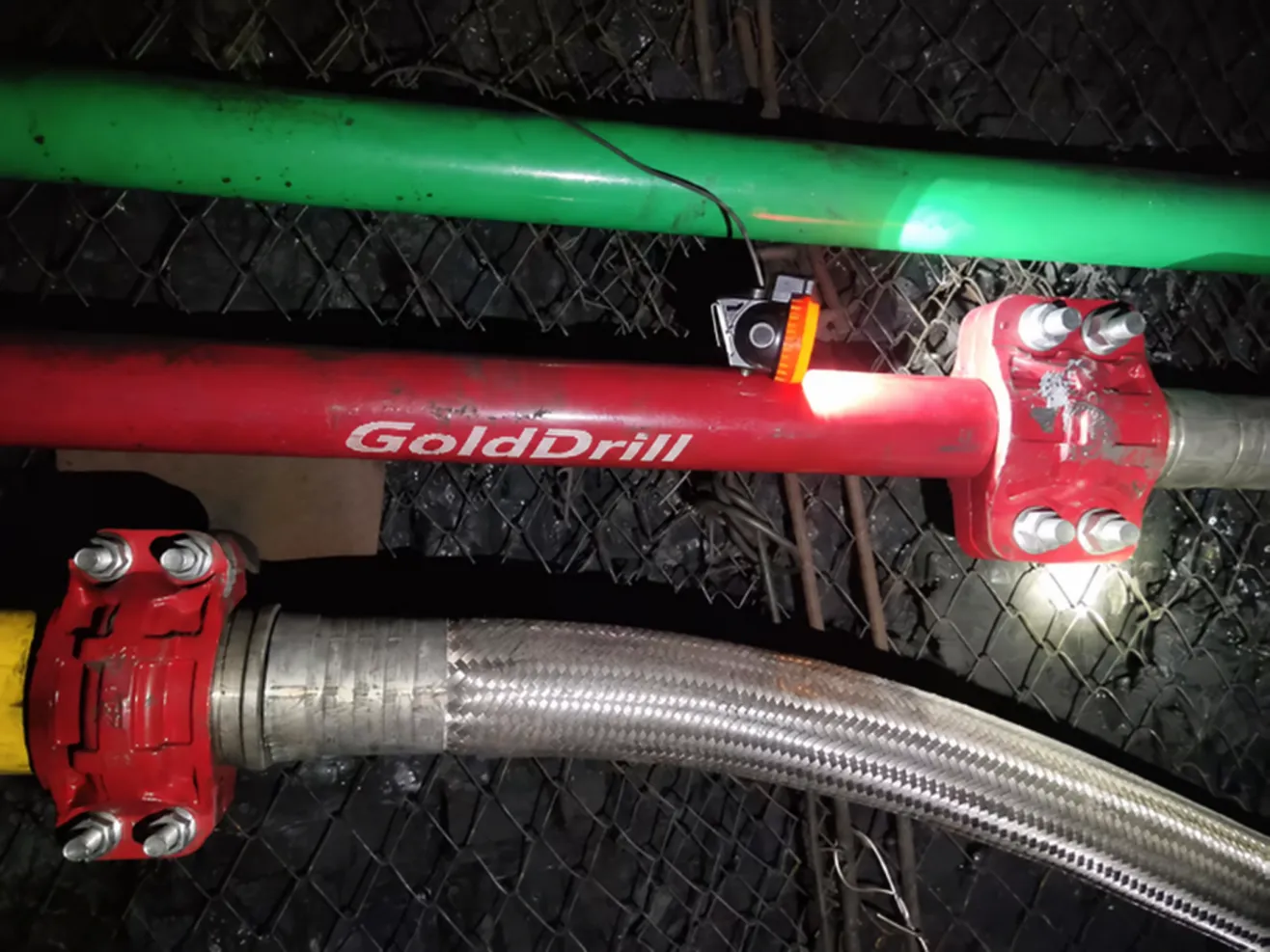
This is exactly the service where Shandong GoldDrill Metal Products Co., Ltd. has built its reputation. GoldDrill high-pressure grooved couplings and fittings (DN25–DN300) are engineered for underground high-pressure lines: forged steel housings in both rigid and flexible types, with pressure ratings matched to the service — from dewatering and compressed-air mains to emulsion supply systems for mechanized longwall faces.
Because the coupling locks onto the pipe through grooved engagement rather than threads or welds, it tolerates angular deflection and ground movement, absorbs vibration at pump connections, and can be opened and re-tightened hundreds of times as the working face advances — with nothing more than a spanner, and no fire permit. Every batch is pressure-tested and traceable, and the products carry underground coal mine safety certification (MA/KA) and are manufactured under an ISO-certified quality system.
Higher pressure ratings, special diameters, and custom configurations are available on request. For a grooved-fittings selection chart or a quotation for your underground line, contact GoldDrill's export team.
6. Safety and Certification Requirements
Underground piping is a regulated safety component, not just infrastructure. Depending on jurisdiction, underground mine pipes and fittings may need:
•Mine safety certification (e.g., MA/KA in China, or local equivalents)
•Flame-retardant and anti-static properties for auxiliary components
•Traceability and pressure test records for high-pressure emulsion systems
Open-pit piping follows conventional industrial codes, with the main site-specific concerns being UV degradation, freeze-thaw, and impact protection near traffic areas.
7. Maintenance and Relocation Cycles
Underground piping systems move constantly. As the face advances, sections of water, emulsion, and compressed-air lines are extended, relocated, and dismantled weekly or even daily. Couplings that can be opened and re-tightened hundreds of times — without tools beyond a spanner — directly translate into less downtime.
Open-pit piping relocates in stages as the pit deepens or expands, typically every few months per pump station. Downtime matters, but the greater cost driver is pipe wall wear, so wear monitoring and segment replacement dominate the maintenance budget.
How to Choose: A Practical Checklist
1.Confirm maximum working pressure — including surge pressure on pump start/stop, not just steady-state
2.Define media — solids content, particle size, pH, and temperature
3.Map the layout — total run length, elevation change, number of bends, and relocation frequency
4.Check certification requirements — underground mines almost always require certified pipe, fittings, and valves
5.Pick the connection strategy — quick-connect couplings wherever frequent dismantling or no-weld rules apply; flanges or fusion for permanent runs
6.Verify valve ratings match the line — a 40 MPa emulsion line is only as strong as its weakest valve
One Supplier for Both Worlds
The most efficient procurement strategy is sourcing both systems from a manufacturer that covers the full pressure and material range. Shandong GoldDrill Metal Products Co., Ltd. supplies mining pipeline systems for both underground and open-pit applications, including:
•Quick-connect couplings and high-pressure pipe clamps (DN25–DN300) for fast-moving underground lines
•Corrosion-protected steel pipes certified for underground coal mine use (MA/KA)
•Emulsion remote supply systems rated up to 40 MPa for mechanized longwall faces
•Wear-resistant pipes and HDPE pipes for open-pit dewatering, tailings, and slurry transfer
•Industrial valves matched to each service — slurry, gate, check, ball, butterfly, and pressure-testing valves
Higher-pressure or special-diameter configurations are available on request. Products are manufactured under an ISO-certified quality system.
Frequently Asked Questions
Can HDPE pipe be used underground?
Yes — HDPE is widely used underground for low-to-medium pressure drainage and compressed-air lines, especially in metal mines. However, in coal mines with strict fire and certification requirements, certified steel pipe is usually mandatory for high-pressure services, and HDPE selection should always be confirmed against local mine safety regulations.
How long does a wear-resistant pipe last in slurry service?
Service life depends on solids content, particle hardness, and velocity — often several times longer than standard steel pipe under the same conditions. For an accurate estimate, share your media analysis and flow data with the manufacturer for a wear assessment.
What coupling type is best for frequently relocated lines?
Quick-connect (grooved-style) couplings are the standard choice: they need no welding, tolerate misalignment, and can be reassembled repeatedly without damaging the pipe end. For high-pressure emulsion lines, always specify couplings with a pressure rating matching or exceeding the pipe.
Need a piping configuration for your mine? Contact Shandong GoldDrill Metal Products Co., Ltd. for a quotation, technical drawings, or a wear-life assessment tailored to your site conditions.